– by Tiffany Gough
I have written this post in response to a recent article by Tracy Cassels of the site Evolutionary Parenting. Tracy asked for clarification or corrections where necessary and I felt strongly compelled to respond point by point to dispel the many inaccuracies in that piece. I have interspersed a bit of my own opinion, but chose to support my points primarily using quotes from Magda Gerber herself as evidence. So for you, Tracy, and for any readers who might also misunderstand:
~~
You said: “What I do know is likely the same as any parent who decides to go looking into it without immersing oneself completely so, arguably, it speaks to how an average person would interpret RIE given the articles freely available.”
The fact is: You wrote a piece indicting a philosophy for incorrect facts that you did not take the time to clarify or understand better and you used “an average person” as an excuse for doing minimal research and drawing inaccurate conclusions.
~~
You said: “Although previously people attributed too little to infants and children, arguably RIE attributes too much, or perhaps attributes capacities in the wrong areas.”
The fact is: RIE doesn’t “attribute too much”. RIE advocates meeting the child where they are, observing to determine their needs, and giving them only as much help as they need to succeed on their own. RIE only attributes too much capability if you believe an infant is an incapable, empty vessel.
Magda says: “We have a basic trust in the infant to be an initiator… we provide the infant with only enough help necessary to allow the child to enjoy mastery of her own actions” (Gerber 2).
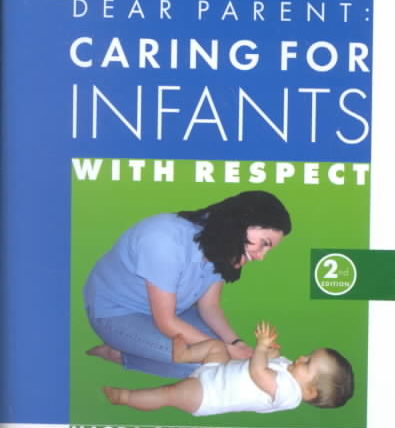
“At RIE, we urge parents to relax, observe, end enjoy what their babies are doing, noticing and enjoying new skills as they develop naturally.”![Dear-Parent-Caring-for-Infants-With-Respect-Paperback-L9781892560063[1]](https://respectfulparent.com//wp-content/uploads/2014/04/Dear-Parent-Caring-for-Infants-With-Respect-Paperback-L97818925600631-189x300.jpg)
~~
You said: “Based solely on observation… without the biological underpinning, there’s really just observation and we must take that with a grain of salt.
The fact is: RIE is based firmly in attachment theory and the extensive research of Drs. Bowlby and Ainsworth. Additionally, attachment theory itself is “based solely on observation.” RIE is NOT based on Attachement Parenting, ala Dr. and Mrs. Sears.
Attachment theory states that a young child needs to develop a relationship with at least on primary caregiver for social and emotional development to occur normally.
“Attachment behavior in adults towards the child includes responding sensitively and appropriately to the child’s needs” (McLeod).
“John Bowlby… (1952) observed that children experienced intense distress when separated from their mothers” (McLeod).
“Bowlby (1958) proposed that attachment can be understood within an evolutionary context in that the caregiver provides safety and security for the infant” (McLeod).
Magda says: “A parent’s role is to provide a secure and predictable environment. You do have to be sensitive to your infant’s changing needs; the infant has to feel your caring presence” (Gerber xv).
“Some experts tell you to take your baby with you wherever you go to give her security. We believe that babies derive security not only from being near their parents, but also from being allowed to explore their environment freely on their own.
You need to check in frequently and, of course, be available when your baby needs to be fed, diapered, bathed, etc. By all means, be with your baby when you enjoy relaxing and just watching him” (Gerber 15-16).
The fact is: Parents have things to do, from working outside the home to laundry and dishes to showering or reading a book, that do not involve paying 100 percent attention to their babies.
Magda says: “When adults try to do their own work while trying to pay attention to their children, both parent and child end up feeling frustrated. This trap, I feel, is created by books and advisors who say that a baby needs to have his parent near him at all times…
Many parents are concerned about not being ‘good parents’ when they are not with their child. I still do not quite understand why it is so difficult for parents to accept that it is all right (sic) to leave a child in [a] totally safe space, while the parent is available but doing something else within hearing distance” (Gerber 17-18).
~~
You said: “Ignoring the importance of touch in favor of the mind.” You quoted Magda Gerber as saying, “What is the value of being held or touched if it’s only the skin that is in contact? What about your minds connecting, or to become more philosophical, you souls?”
“I want to scream because too many people actually believe that touch is unimportant… [and] this seems to be the way touch is interpreted by many parents reading up on RIE.”
The fact is: You have misinterpreted this quote and, taking it out of context and without a citation, have made it difficult for anyone to counter your point. The truth is that Magda was not talking about touch being unimportant. She was talking about touch being critical, but that touch for the sake of touch is not good enough. That when we touch an infant, we need to touch not only with our hands, but intimately with our souls as well.
Magda says: “Often parents believe that holding is good, being left alone…is not. I believe babies need both.
There are sound physiological reasons why a newborn should not be held all the time. To begin with, he must adapt to his new capabilities outside the womb, by kicking, stretching, curling and uncurling his body… I see lots of infants hanging on their [parents] in carriers. The babies are cramped and confined; any movement by the parent compresses them further into the carrier. Whenever the parent moves about or gesticulates, it is like a “mini-earthquake” for the baby!” (Gerber 45).
“There are also psychological reasons why around-the-clock holding is not developmentally sound. Parents often say to me, ‘I want to hold my baby all the time to show him how much I love him.’ Most animals can show affection only through touch, but we humans have an extensive, varied, and refined repertoire of ways to demonstrate love. To me, a mature, evolved person shows love by respecting the otherness of the beloved. You become a good parent not only by listening to your instinctive messages but by paying close attention to your baby… Sensitive observation flows from respect… How often I see parents holding their babies, or carrying them in contraptions close to the body, without paying the slightest attention to them” (Gerber 45-46).
~~
You said: “RIE is a philosophy that focuses on respect of a child as an independent person that we must observe in order to gain our own awareness of them.”
“RIE views infants as being independent from birth and they are to be treated with the respect that comes with a mind ready to engage…”
The fact is: RIE is a philosophy that focuses on respect of the infant as a dependent, but aware and competent individual, capable of communicating with us and participating in her own care.
Magda says: “We not only respect babies, we demonstrate our respect every time we interact with them. Respecting a child means treating even the youngest infant as a unique human being, not as an object” (Gerber 1).
“We observe carefully to understand the infant’s communications and his needs.
The more we observe, the more we understand and appreciate the enormous amount and speed of learning that happens during the first two or three years of life. We become more humble, we teach less, and we provide an environment for learning instead” (Gerber 2).
~~
You said: “The issue of the fourth trimester should be…moot.”
The fact is: It is moot in this conversation, because it is irrelevant. RIE sees birth as the first separation and encourages parents to help babies when necessary to make a smooth transition from life inside the womb to life outside it. Caring for a dependent child is entirely different from claiming the need to create a womb-like environment outside the womb.
I just want to briefly point out the fact that the “fourth trimester” being three times as long as a trimester doesn’t make any sense. You’re talking about a second gestation, not a fourth trimester. Babies are fully capable of adapting to their changed environment in three months or less, as evidenced by the fact that their sleep cycles regulate in about 4 months, they learn to suckle efficiently within a week or so, and their eyes adjust constantly from birth. Additionally, you mark mobility as the end of the “fourth trimester,” but babies are far from independent just because they are mobile. What’s the difference between needing help to move across the room and depending on a parent or caregiver for food, connection, and safety for at least 10-20 years?
Magda says: “Babies have to learn to adapt to a very different life from the one to which they were accustomed in the womb. They need to sort out sensations coming from within and a barrage of stimuli coming from the outer world. They may feel lots of discomfort, and they express their discomfort by crying.
Their discomfort may be from hunger, pain, feeling too cold or too warm, sudden changes in position, or too much noise, light, or activity around the child…
Sometimes a change from wakefulness to sleep, and vice-versa, are vulnerable transition times… A very young baby may cry to discharge energy.
It takes babies time to find out how they can help themselves. Eventually they learn how to get rid of gas bubbles, how to relax and fall asleep, how to suck most efficiently, etc.” (Gerber 39-40)
~~
You said: “The second issue about forced independence… is there doesn’t seem to be a lot of discussion surrounding how parents can properly read the signals sent by their children… telling them that their child is actually yearning for less contact and attention is not the message we should send. When parents believe their baby wants to be left alone, despite a wealth of research suggesting otherwise, parents can take that to mean they can and should spend less time with their babies, a problem when the average baby receives so little touch it borders on criminal.”
The fact is: Anyone who is practicing RIE will most certainly NOT be giving their baby so little touch that it might be even remotely in the same vicinity as criminal. RIE never advocates spending very little time with babies. I think the question that should be posed is “Less than what?” If it is less than constant, then yes, RIE advocates less than constant contact with your baby. If it is less than the minimum for secure attachment, then absolutely not. RIE advocates much much more than that.
Magda says: “Responding to a crying baby: Crying must be responded to. But how is a more complicated issue. To follow the advice, “Do not let your baby cry,” is practically impossible. At times, the harder a mother or father tries to stop the baby’s crying, the more anxious everyone becomes…
The way a parent responds to the baby also “conditions” the baby to expect specific responses (feeding, covering, rocking). Instead of responding to real need, the parent may respond to a created need, conditioned by the parent.
For example, an anxious and irritated parent (crying does irritate!) will most likely do what brings the fastest relief—give the breast or bottle… This is the right solution if the baby is hungry. However, if the baby has other needs…, she will learn to expect [suckling] in response to these other needs, and grasp the breast or bottle even though she is not hungry. Fast, easy solutions work to relieve immediate tension but can result in forming bad habits” (Gerber 40).
“How can you help?… First, do accept that you don’t understand instinctively what exactly makes your baby cry, nor what to do about it. Next, rather than responding mechanically with one of the usual routines of holding, feeding, or changing your baby, to stop the crying, try quietly talking to your baby.
Remember, crying is a baby’s language—it is a way to express pain, anger, and sadness. Acknowledge the emotions your baby is expressing. Let him know he has communicated.
For example, you might say, ‘I see you’re uncomfortable. And hearing you cry really upsets me. I want to find out what you need. Tell me. I will try to understand your cues…’… Then think out loud. ‘Could it be that your diaper is wet? I don’t think you are hungry because you just ate. Maybe I’ve been holding you long enough and maybe you want to be on your back for a while.’ This is the start of lifelong, honest communication” (Gerber 41).
“My goal is for you to really understand what I mean. Then you can take what you like and reject what you don’t like. But that is what is so difficult, the understanding” (Gerber xvi).
“It is easy to give advice, but if good advice would work, we would all be perfect. I do not expect you to be perfect. I do not expect you or any other parent to be superhuman. I just hope that the RIE principles will slowly become part of your awareness, your thinking and your actions, and that eventually, when they truly become a part of you, they will serve as your own inner guidelines… Those inner guidelines can gently remind you… to use a little more patience, empathy, and sensitivity next time” (Gerber xvii).
~~
You said: “I believe that all babies should be supported when crying – so long as they allow it and don’t push away (in which case, give them their space, but remain close and remind them you are there when they are ready).”
The fact is: I’m confused as to the issue here, because that is exactly what RIE advocates. The entire argument you follow up with about presupposing that babies cry for no reason is completely irrelevant. See above for the RIE stance on crying as communication and how to respond. It seems to me that your issue is less with RIE and more with, truly, your and others limited understanding of it or motivation to discover it. I am able to support this entire piece simply by pulling quotes from Magda’s most frequently recommended book, which costs $13.09 USD brand new from Amazon.
You said: “Some of the problems are with interpretation and the fact that some of what is said in RIE can be misconstrued by parents looking for an easier way out.”
The fact is: If you base your perception of anything on the interpretations of people “looking for an easier way out,” you’re in big trouble. People looking for the easy path are never a good measure of anything worth doing. I would suggest that you would probably not want anyone making assumptions about your theory based on the opinions of people looking for the easy way out.
Sources Referenced:
Cassels, Tracy. “My Problems With RIE.” 7 April 2014. Evolutionary Parenting. 9 April 2014. <http://evolutionaryparenting.com/my-problems-with-rie>.
Gerber, Magda. Dear Parent: Caring for Infants with Respect. Ed. Joan Weaver. Los Angeles: Resources for Infant Educarers (RIE), 2002.
McLeod, Saul. “Attachment Theory.” 2009. Simply Psychology. 9 April 2014. http://www.simplypsychology.org/attachment.html.
Additional Resources:
Your Self-Confident Baby by Magda Gerber ($12.08 on Amazon)
1, 2, 3… The Toddler Years by Irene Van der Zande ($13.15 on Amazon)
The RIE Manual by Resources for Infant Educarers ($22 on rie.org)
Theories of Attachment: An Introduction to Bowlby, Ainsworth, Gerber, Brazelton, Kennell, and Klaus by Carol Mooney ($16.49 on Amazon)
www.respectfulparent.com (not officially RIE, or endorsed by RIE)
www.respectfulparent.com/12-reasons-why-the-rie-craze-isnt-crazy
Disclosure: This post contains affiliate links to Amazon. If you purchase a product I have linked, I will receive a small portion of the seller’s profits. I have only recommended products I absolutely stand behind and I would recommend them with or without the marketing fee in any context.

YES YES YES! Thank the heavens that you took the time to rebut the insanely inaccurate, hurriedly written post! I cannot believe that someone who as experienced in writing as her, would take the time to write such an awful article which is so full of obvious flaws and obviously unedited it’s crazy! All she does it make herself look like a blithering idiot. She assumes the rest of the world is like her! In fact, the one thing that was gleemingly obvious in that article is that she hasn’t bothered to research what she is snap-shot critiquing that she obviously feels threatened that RIE/Pikler will take her customers away from her and she’ll have no reason to write her articles anymore. *shakes head*.
Once again, thank you for your educated, researche rebuttle. It’s clear to see who the superior writer is.
Wow. It’s nice that you elaborate and clarify but the tone RIE supporters take when confronted with ANY disagreement or doubts is just very disrespectful. Slee the comment above – blabbering idiot, really? In response to someone who freely admits at the start she is not an expert and who is very open to discussion about it? And then your own response and first paragraph – if you want to teach babies respect maybe you shouldn’t disrespect other adults either? Even if they are misinformed or ignorant in your opinion.
Certainly does nothing to make RIE look good when you treat other people this way in response to an article which is pretty neutral in tone.
When I first ran across this article, my own hackles went up a bit, for I very much appreciate all things RIE. I read carefully–all of it. I paused. And now, I am appreciating everything written–both the initial article and the well thought out response clarifying and supporting RIE. What stands out to me and what I feel is essential in all of this is how parents are truly working at being intentional with how they parent, and are striving to parent well.
My work as a Parent Coach and as an author has had me connecting with parents from many different cultures and philosophies. What I want to encourage for each and every one is to move away from labels (of which any philosophy can become) and instead focus on stepping into all things parenting from a place of calm connection. To be clear about the kind of future adult you intent to grow, to work at growing yourself towards the kind of parent you want to be, to be forgiving and to give yourself the grace you need as you find yourself, inevitably, struggling with different ages and stages.
I like the “label” of respectful parenting. Respect for ourselves, for our children, for developmental stages. Sometimes this looks like permissive parenting–and can be more about our anxiety as we hesitate to step alongside our child and whatever big feelings are stirred up. Sometimes this looks like Authoritative parenting–truly the preferred style and often when we are feeling calm and confident, clear about our values and what kind of future adult we intend to grow. Sometimes, due to severe chaos in the home, it can step into authoritarian style parenting. And this is when a parent truly needs our support and encouragement.
So I found myself truly appreciating this exchange. It gives me hope for our future because, to me, it indicates how much thought and care and intention parents are stepping into all things children with. That is to be greatly appreciated.
Here is a link to my article “Parenting Well, No Matter the Label.” https://www.justaskalice.org/2018/10/13/parenting-well-no-matter-the-label/
I hope we all can encourage each other as we each discover what works best in our own families and cultures.
Respectfully,
Alice Hanscam
Author and Parent Coach
http://www.justaskalice.org
The way a parent responds to the baby also “conditions” the baby to expect specific responses (feeding, covering, rocking). Instead of responding to real need, the parent may respond to a created need, conditioned by the parent.
For example, an anxious and irritated parent (crying does irritate!) will most likely do what brings the fastest relief—give the breast or bottle… This is the right solution if the baby is hungry. However, if the baby has other needs…, she will learn to expect [suckling] in response to these other needs, and grasp the breast or bottle even though she is not hungry. Fast, easy solutions work to relieve immediate tension but can result in forming bad habits” (Gerber 40).
This is where RIE and I part ways, as it shows a huge lack of understanding about the biological functions of breastfeeding, which is about so much more than hunger. An infant suckles for a myriad reasons including hunger, thirst, warmth, pain relief, connection, it is never a bad habit to feed your baby to sleep. It is the biological norm and your baby will self soothe when they are developmentally ready to.
Thank you for saying that. I agree with you wholeheartedly.
I am only new to RIE parenting and when I read the first article I felt as though it was wrong and didn’t represent what I understood of RIE. Your article was very clear in presenting this information, thank you.