Next Course Starting June 16th. Sign Up!

Respectful Parent

Parent Effectiveness Training, San Diego Parenting Classes

  • Home
  • About Kelly
    • Parenting Philosophy
    • What You Will Learn
    • Testimonials
  • Services
    • Classes & Workshops
    • Personal Coaching
    • Speaking Engagements
  • Resources
    • Parenting Books
    • Children’s Books
    • Thoughtful Independent Play Toys & Gift Guide
    • Awesome Parenting Gear
  • Free Consult
  • Contact
  • Blog
  • Privacy Policy

How to Talk so Kids Will Listen the First Time

May 30, 2018

Child doesn't want to listen

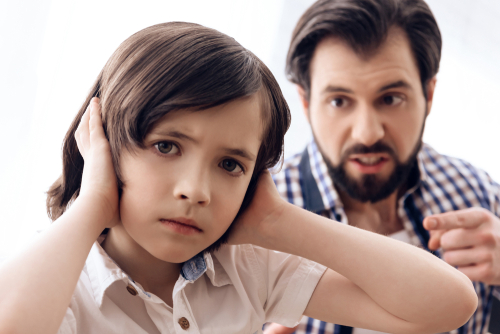
We’ve  all been there – when we ask our kids to do something or we give them some um… “constructive criticism” they come back at us with anger, withdrawal, and defensiveness and they certainly don’t want to listen to us in that state of mind. Our well-meaning feedback or instruction falls on deaf ears.  They can’t seem to take anything we say easily. Typically that’s because of HOW we are saying it. Things like – “I can’t understand you when you’re whining.” “ If you wouldn’t poke your brother, he’d leave you alone.” “If you put things away, you could find things easier.”  These expressions send underlying messages to our children of blame, and the natural reaction to blame? You guessed it – anger, defensiveness, and withdrawal.

When we say, “You’re whining” a child hears, “I don’t like that you’re upset and I’m not comfortable with your feelings.”  “If you didn’t provoke him then it wouldn’t have happened” becomes “you did something to deserve this.”  If you would have put your things away..”  becomes “it’s your fault you can’t find it.” None of these things help the child who is upset.


Why Your Kids Don’t Listen to You

Often times we need to listen to them first and once they are calm, then they can hear our message. However, if we are asking them to do a perfectly reasonable thing, it may just be how we are saying it. The most common problem parents want my help with is “getting their kids to listen” and almost always my solution to that is “getting the parents to talk differently.”  Most parents don’t get heard because their kids don’t understand what they mean or what they want. The messages parents are sending are vague and unclear to a young and developing brain.  Instead, we want to give children the information they need so they can WANT to help us rather than RESIST helping us.

If resistance is a problem in your house here are a few simple shifts in the way you talk that can help your child help you:

Stop Using Adjectives So Much

Adjectives are subjective, something beautiful to you may be atrocious to your spouse…kind of like the amazing flower sculpture I bought for that empty corner of our house. I thought it was just the thing, my husband thought it was weird and quirky.  Needless to say, we both had different adjectives in mind to describe the wonderful artwork!

Kids are the same – “messy” to us is often just right to a child, they know exactly where everything is. “Rude” is often sticking up for themselves, “disrespectful” is a form of retribution and hurt feelings – a sign of a rift in a relationship. “Lazy” is relaxing or unwinding, “inconsiderate” is forgetful, “loud” for us equals exciting for them. You get the point, adjectives just aren’t getting the point across and even worse, they are often taken as insults, judgments or labels and met with, you guessed it, defensiveness.   I mean if my husband told me my beautiful flower sculpture was a “waste of money” I surely would not want to change my behavior, in fact, I might even go out and get another one, you know if I was 12… or something.

Say What You See Instead

Instead of telling your child to pick up his messy room, say what you see – toys on the floor and an unmade bed. NOW he has enough information to know what you mean. He doesn’t have to guess which part of the room looks messy to you – it’s now CLEAR. It’s the toys on the floor and the unmade bed you don’t like! Now he gets it! Now he can listen. 

Telling your child you don’t like it when he calls dinner disgusting rather than telling him to stop being ungrateful is a lot more clear. It lets him know what specific thing you want him to stop so he can do better next time. Saying that bikes are in the driveway is a lot more clear than telling them they are inconsiderate or disrespectful.

In general, if you can take a picture of it or record it with a microphone, it’s a clear description of the behavior you don’t like (or like!). If you can’t see it, hear it or feel it, it’s probably an adjective and will leave a lot of room for error.

Then Add the “Why” In

Now that a child knows exactly what you mean they can start to listen and the next step is to tell them why or how it impacts you. Another adult is going to know what you mean when you say for example… “I’m on the phone.” And that is often enough information for an adult to move away or quiet down, but a child isn’t going to connect the dots. They’re going to wonder why you are telling them something so blatantly obvious.  If instead, you say, “When you laugh and yell when I’m on the phone I can’t hear Grandma.” Now they know how they affect you and can choose to move away or modify themselves voluntarily, no force or yelling necessary. Even better, they’ve just taken a step towards problem solving and consideration.

Now Talk About Feelings

It’s gonna be ok – you can talk about feelings, everyone has them, they don’t have to be all goopy or scary. Once they know the behavior and the impact on you,  you can now say how you feel about the impact. Careful to note that the feelings are attached to the effect, not the child, attaching them to the child can sound blameful instead of factual.  “When the toys are on the floor, I worry that I might trip on something” gives the child much more information and they can act on that information willingly. For a positive example, “I love it when you let the dog out when she scratches at the door so I don’t have to come downstairs. Thank you.”  Keep in mind the more you tell them how they affect you in positive instances, the more they’ll help you when you need it.

These three things combined, give the child information about you as a real person. They help them see you as a genuine person rather than in a ‘role” of the parent. You are a person with your own unique likes and dislikes and the more they know about you, the better the relationship will be. No yelling necessary.


You Might Also Like

Behavior and Acceptance; A Constantly Moving Target 

New Tips for Dealing with Children’s Anger (A Real LIfe Example) – By Larissa Dan

Categories: Behavior & Discipline, Big Kids (6-12), Development, preschoolers (age 3- 5), Teens, Toddlers 1 Comment / Share

« Why We Can Stop Chasing Connection
When Fear Takes Over Your Child »

Trackbacks

  1. The Secret to Staying Calm when You're Mad | Respectful Parent says:
    August 15, 2019 at 11:49 pm

    […] How to Talk so Kids Will Listen the First Time […]

    Reply

Leave a Reply Cancel reply

Your email address will not be published. Required fields are marked *

Your journey for better parenting starts here! We will guide you & mentor you for maintaining better relationships with your kids. Sign up for our newsletter and get tips & expert advice on effective parenting techniques delivered to your inbox.

Daily Parenting Inspiration

My youngest finished 8th grade yesterday; my oldes My youngest finished 8th grade yesterday; my oldest will be a senior, and that has me feeling lots of things!

 Here are my thoughts:
My job as a parent is changing.
One child is about to become a senior in high school, and the other is starting high school, and somewhere along the way, I crossed into a whole new phase of parenting: preparing my kids for adulthood.

These days, parenting feels less like managing every detail and more like slowly stepping back so they can learn to manage their own lives. Which sounds beautiful and inspiring until you’re sitting in the passenger seat while your teenager says, “I got it,” approaching a yellow light. 😵‍💫

We’ve entered the season of job applications, making appointments, missed alarms, learning lessons the hard way, and me trying very hard not to immediately swoop in.

And honestly? It’s emotional.
Because while they’re becoming more independent, I’m also realizing I get to start thinking about what’s next for me too. My goals, my work, my marriage, my next chapter.
This phase feels a little like letting go with one hand while reaching forward with the other. 

I get to just be their friend a lot more while making sure they'll be a good roommate and spouse in the near future.

I'm close to working myself out of job and I honestly think I'm ready for it!

#parentingteens #parenteffectivenesstraining #growingupfast
“My child is not giving me a hard time… my child i “My child is not giving me a hard time…
my child is having a hard time.”

That one shift changes everything.

Less: “Why are they doing this?”
More: “What’s going on for them?”

Hard behavior is often just… hard feelings.

When we see the struggle,
we respond differently.

Less reacting.
More supporting. 💛 #respectfulparent #sandiegomoms #parenteffectivenesstraining #attachmentparenting #rie #PositiveParenting #parentingtips #DefianceOrMisunderstanding
“I didn’t say it was your fault… I said I blame yo “I didn’t say it was your fault…
I said I blame you.” 😅

When kids blame, it feels personal.

But it’s usually not about being right…
it’s about letting out big feelings.

Blame =
“I’m frustrated.”
“I’m overwhelmed.”

Before correcting, try connecting:

“You’re really upset.”
“That was hard.”

Less defending.
More understanding. 💛
“Children do well when they can.” So when they’re “Children do well when they can.”

So when they’re not…
It’s not about won’t.
It’s about can’t (yet).

Less: “Why are they acting like this?”
More: “What’s getting in their way?”

Skills take time.
Emotions get big.
Brains get overwhelmed.

And in those moments,
they don’t need perfection…

They need curiosity - not furiosity. 😋💛

Yup, I made up a word.

#respectfulparent #childrendowellwhentheycan #drrossgreen #parenteffectivenesstraining
End of school = chaos… Then suddenly… no structure End of school = chaos…
Then suddenly… no structure 😅

Or camp… to camp… to camp.

Summer is fun ☀️
But it can also mean:
more pushback
more “I’m bored”
more sibling stuff
more BIG feelings

And when routines change, behavior usually does too.

The good news?
You don’t need more control… you need better tools.

✨ listen without shutting them down
✨ set limits without the battles
✨ handle big emotions (theirs + yours)

Less surviving
More thriving

My summer Parent Effectiveness Training class is coming up 💛
Drop a ☀️ and I’ll send details!

 #respectfulparent #sandiegomoms #parentingtips #parentingmiddleschoolers #PositiveParenting #attachmentparenting #rie #parenteffectivenesstraining #RespectfulParenting
Oof. This is a hard one sometimes! Share your exam Oof. This is a hard one sometimes! Share your examples of a time this happened 🙏🏼🙈
I'm just reading the book "Untangled -Guiding Teen I'm just reading the book "Untangled -Guiding Teenage Girls Through The Seven Transitions into Adulthood" by @lisa.damour ,  and I love it. This one struck a chord with me so I thought I'd share. It's from the section "The Pull of Popular."

What does “popular” actually mean?

Because when you look a little closer, the kids who seem the most “popular” aren’t always the most liked. Sometimes, their influence comes from social power, not genuine connection. And that can come with a lot of pressure—on everyone.

This can be a powerful conversation to have with your child.

Not in a lecture-y way, but with curiosity:
“Do kids actually like being around her, or are they worried about being on her bad side?”
“What makes a friendship feel good to you?”

Helping kids think beyond popularity and toward the quality of their friendships gives them something much steadier to stand on.

Because in the long run, feeling safe, accepted, and able to be yourself matters a whole lot more than being “popular" and then you may just hit that sweet spot of being "popular" because you are well liked!

 #parentingtips #sandiegomoms #respectfulparent #raisingteenagegirls #parentingmiddleschoolgirls
We have dreams for our kids. The friends we hope We have dreams for our kids.

The friends we hope they choose.
The sports we hope they love.
The grades we hope they earn.
The path we quietly map out in our minds…

And then they grow.
And they choose.

Sometimes differently than we imagined.

And that’s where it gets uncomfortable.

Because the real question becomes:
Are we raising children who follow our path…
or children who can find their own?

Letting go doesn’t mean stepping back completely.
It means shifting roles.

From director ➡️ to guide
From fixing ➡️ to listening
From telling ➡️ to being available

It means offering wisdom when it’s invited,
and trusting them enough to figure some things out on their own.

That’s not easy.

But that’s where confidence is built.
That’s where ownership grows.
That’s where they become themselves.

Not a version of us.

If this hits home, this is exactly the kind of skill we work on in Parent Effectiveness Training—how to support your kids without shutting them down.
My next class starts in less than two weeks:
☀️ Tuesday Mornings
🗓️ April 7th – May 26th
⏰ 9:30 am – 12:30 pm (Pacific Time)
📚 Eight classes
And of course, I'm still working on this!

Reg info in first comments/bio 👇👇
Follow on Instagram


  • Privacy Policy
  • Free Consult

© 2026 Respectful Parent · All Rights Reserved.

  • Facebook
  • Instagram