Next Course Starting June 16th. Sign Up!

Respectful Parent

Parent Effectiveness Training, San Diego Parenting Classes

  • Home
  • About Kelly
    • Parenting Philosophy
    • What You Will Learn
    • Testimonials
  • Services
    • Classes & Workshops
    • Personal Coaching
    • Speaking Engagements
  • Resources
    • Parenting Books
    • Children’s Books
    • Thoughtful Independent Play Toys & Gift Guide
    • Awesome Parenting Gear
  • Free Consult
  • Contact
  • Blog
  • Privacy Policy

Why I won’t tell my sons to “be a man” or to “be a gentleman”

January 26, 2014

  – by Amanda Barnes Cook, PhD


Jennifer Siebel Newsom of Miss Representation fame has released a trailer for her new project on masculinity, The Mask You Live In.  The trailer prompts viewers to think about what it means to boys to be told things like “Be a man” from a small age. Christina Hoff Sommers, author of The War Against Boys, responded with a criticism of Newsom’s trailer.  Sommers’s argument boils down to the claim that Newsom is ignoring the parts of boys’ natures that are “distinctively good.”  Sommers, again, claims that feminists are attacking manhood and that Newsom wants to “re-engineer masculinity.”

Sommers sets out to debunk Newsom by showing that boys like to play with trucks, are more utilitarian, and don’t find talking valuable in solving problems.  Putting aside for a moment the obvious methodological problems with these findings, these differences do nothing to disprove Newsom’s contention that our culture’s ideas of masculinity are, in many ways, harmful for boys and men.  It merely shows that (some) behavioral sex differences (probably) exist.  What Sommers wants to claim is that the existence of sex differences means that there is a portion of masculinity—the part that is related to real sex difference—that is good and necessary. She thinks this proves that there is a core of masculinity that should be preserved and that Newsom is mistakenly ignoring.  Sommers agrees that there are harmful parts of masculinity (she says that “telling a boy to ‘man up’ can be harsh and degrading”), but she wants to isolate the good part and raise it on a pedestal.

The reality, though, is that all of this is not so clear.  Studies that set out to prove that sex differences are biological are fraught with methodological problems.  It is very difficult to separate the effect of pure biology in human subjects who are the result of social upbringing.  In the study Sommers cites about boys not seeing a value in problem talk, for example, surveyed boys reported dislike of talking about problems and said that talking is “weird.”  From this, we can make conclusions about existing children, but not about what our biology says outside of the influence of culture.  One study on parents’ interactions with children found that parents talk much more to girls than to boys.  One might read that study and conclude that culture, not genes, is what causes boys’ dislike of talk.  There is simply no way to look at boys’ reported dislike of problem talk and make robust assumptions about what it means universally to be a man.  It is exceedingly easy to find scientific “evidence” of biological sex difference and use that evidence to justify unequal treatment of and expectations of boys and girls.  If I thought that boys, biologically, do not value problem talk, I might talk to my son even less, and fail to teach him skills that would serve him for life.  When we act on incorrect evidence about which sex differences are innate, we perpetuate inequality—failing both our boys and our girls.

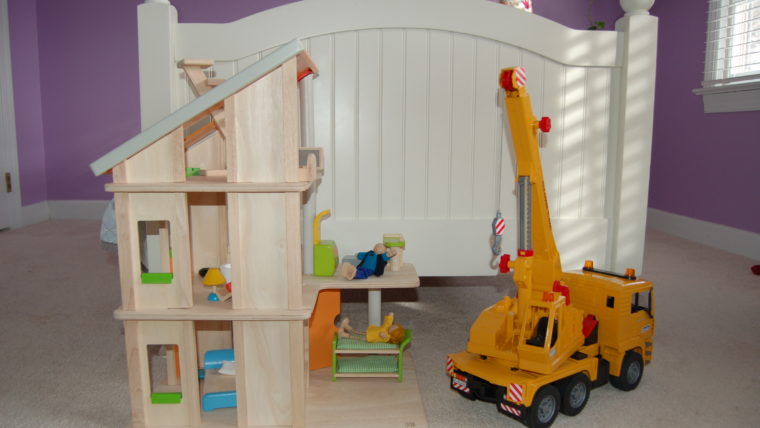
I believe there probably are some behavioral sex differences that do not stem from culture, even if we do not know with any certainty what those differences are.  If it turns out that boys on average like to play more with trucks and girls on average like to play more with dolls, then great.  But what should the implications of that difference be?  That we should buy our boys only trucks and our girls only dolls?  If we do that, we are setting social expectations on their play and limiting their creativity.  If we do that, we are needlessly circumscribing their freedom to be whole human beings.  If boys and girls are both raised in environments with different types of toys, including traditionally-male, traditionally-female, and gender-neutral toys, and parents grant their children the gift of unstructured, child-led play, then each child can make meaningful personal choices.  In that context, all children, including children who deviate from gender norms, are treated respectfully and all children avoid external manipulation of their wants and needs.

The society I just described is what feminists and queer theorists sometimes call “genderless,” though I dislike that term for the bad reaction it inevitably evokes.  Note that the children in this society are free from social expectations of what they will be and do based on their biology.  There are still boys, there are still girls.  There are still boys playing with traditionally-male toys and girls playing with traditionally-female toys.  There are still some differences between the sexes.  But these outcomes are freely chosen.  It’s about freedom, authenticity, and trusting and honoring your child.  Your child as an individual, not as a member of a sex.

I think that respectful parenting and, indeed, a respectful world, must be one in which all people are free of arbitrary social expectations based on their sex.  This is what “masculinity” and “femininity” are: the social expectations placed on a human due to their biological sex. Sommers wants to protect “good” masculinity and get rid of “bad” masculinity.  By my argument, all social expectations of masculinity and femininity are bad.  Sure, there will be people who make traditionally-male and those who make traditionally-female choices.  But if those choices are no longer made on the basis of social expectation, it’s no longer “masculinity” or “femininity” as such.

Let’s look briefly in more detail at the part of masculinity that Sommers wants to save and, truly, exalt.  She defines the laudable aspects of masculinity as including the fact that men are utilitarian, objective, unsentimental and tough-minded, that they like to build, they like to protect and defend vulnerable people, and are good at problem-solving.  She defines acquiring “skills,” developing “strengths” and achieving “self-mastery” as masculine traits.

Do women not acquire skills, strengths, and self-mastery?  Do women not stand up for vulnerable people? Are women incapable of being logical?  The so-called “masculine” traits that she identifies as being good, in fact, when presented as gendered, serve only to define in the negative what it means to be a woman.  “Of course,” she might say, “there are women who acquire skills.”  Then what, pray tell, makes acquiring skills or acting in a utilitarian manner “masculine” traits?

So when Sommers says that teaching boys to “be a gentleman” is the “tried-and-true way to bring out the best in males,” I say, let’s teach our children to be good people.  To be considerate.  To be kind.  To be thoughtful.  To be respectful.  To be loving. To stand up for themselves and for others.  That is the tried-and-true way to bring out the best in human beings.  These are universal, human values that have nothing to do with sex difference.

So do some behavioral sex differences exist?  Yeah, probably.  Does it matter that my boys choose their trucks more often than their dolls?  Not at all.  But it certainly does matter that they are raised in a context in which their own choices and not regressive gender roles dictate their play.  It certainly does matter that our current culture pathologizes and is disrespectful of (and often violent to) gender queer children.  And it certainly does matter that our children know that their parents love them unconditionally and will always do our part in helping them to meet their needs, whether those needs are gender-normative or not.  Okay, I’m off to play trucks.  VROOOOM!

Categories: Emotional Health & Safety 3 Comments / Share

« 12 Reasons Why the RIE Craze Isn’t Crazy
Toddlers are Capable of More Than You Think »

Comments

  1. Tiffany says

    January 26, 2014 at 9:43 pm

    I really like this post, Amanda! I like that you point out that gender neutral doesn’t have to be genderless and that to be progressive, we don’t have to make sure our kids play with all toys equally, just that they have the opportunity to do so and the freedom to choose for themselves.

    Reply
    • Amanda Barnes Cook says

      January 27, 2014 at 5:23 am

      Exactly! Thanks Tiffany!

      Reply
  2. MummyBee says

    January 30, 2014 at 12:53 am

    Thanks for this!! If the goal of gentle parenting is to discover who our children are rather than trying (foolishly) to ‘build’ them, then this is a very important element

    Reply

Leave a Reply Cancel reply

Your email address will not be published. Required fields are marked *

Your journey for better parenting starts here! Sign up for our newsletter and get expert advice on effective parenting techniques delivered to your inbox.

Topics

  • babies
  • Behavior & Discipline
  • Big Kids (6-12)
  • Development
  • education
  • Emotional Health & Safety
  • Family & Siblings
  • Feeding & Nutrition
  • Hygiene & Potty
  • Physical Health & Safety
  • Play & Education
  • Pregnancy & Fertility
  • preschoolers (age 3- 5)
  • Sleep
  • Teens
  • Toddlers


Classes & Workshops

Classes & Workshops — Bringing parents together to have more confidence in parenting...even when it's hard. Book your seat now →

Personal Coaching

Set up a one-on-one session for your unique situation & start implementing strategies confidently and quickly. Request a free consultation →

Speaking Engagements

Ask Kelly to talk at your school, workplace, place of worship or other community event. Learn More →


Your journey for better parenting starts here! We will guide you & mentor you for maintaining better relationships with your kids. Sign up for our newsletter and get tips & expert advice on effective parenting techniques delivered to your inbox.

Daily Parenting Inspiration

My youngest finished 8th grade yesterday; my oldes My youngest finished 8th grade yesterday; my oldest will be a senior, and that has me feeling lots of things!

 Here are my thoughts:
My job as a parent is changing.
One child is about to become a senior in high school, and the other is starting high school, and somewhere along the way, I crossed into a whole new phase of parenting: preparing my kids for adulthood.

These days, parenting feels less like managing every detail and more like slowly stepping back so they can learn to manage their own lives. Which sounds beautiful and inspiring until you’re sitting in the passenger seat while your teenager says, “I got it,” approaching a yellow light. 😵‍💫

We’ve entered the season of job applications, making appointments, missed alarms, learning lessons the hard way, and me trying very hard not to immediately swoop in.

And honestly? It’s emotional.
Because while they’re becoming more independent, I’m also realizing I get to start thinking about what’s next for me too. My goals, my work, my marriage, my next chapter.
This phase feels a little like letting go with one hand while reaching forward with the other. 

I get to just be their friend a lot more while making sure they'll be a good roommate and spouse in the near future.

I'm close to working myself out of job and I honestly think I'm ready for it!

#parentingteens #parenteffectivenesstraining #growingupfast
“My child is not giving me a hard time… my child i “My child is not giving me a hard time…
my child is having a hard time.”

That one shift changes everything.

Less: “Why are they doing this?”
More: “What’s going on for them?”

Hard behavior is often just… hard feelings.

When we see the struggle,
we respond differently.

Less reacting.
More supporting. 💛 #respectfulparent #sandiegomoms #parenteffectivenesstraining #attachmentparenting #rie #PositiveParenting #parentingtips #DefianceOrMisunderstanding
“I didn’t say it was your fault… I said I blame yo “I didn’t say it was your fault…
I said I blame you.” 😅

When kids blame, it feels personal.

But it’s usually not about being right…
it’s about letting out big feelings.

Blame =
“I’m frustrated.”
“I’m overwhelmed.”

Before correcting, try connecting:

“You’re really upset.”
“That was hard.”

Less defending.
More understanding. 💛
“Children do well when they can.” So when they’re “Children do well when they can.”

So when they’re not…
It’s not about won’t.
It’s about can’t (yet).

Less: “Why are they acting like this?”
More: “What’s getting in their way?”

Skills take time.
Emotions get big.
Brains get overwhelmed.

And in those moments,
they don’t need perfection…

They need curiosity - not furiosity. 😋💛

Yup, I made up a word.

#respectfulparent #childrendowellwhentheycan #drrossgreen #parenteffectivenesstraining
End of school = chaos… Then suddenly… no structure End of school = chaos…
Then suddenly… no structure 😅

Or camp… to camp… to camp.

Summer is fun ☀️
But it can also mean:
more pushback
more “I’m bored”
more sibling stuff
more BIG feelings

And when routines change, behavior usually does too.

The good news?
You don’t need more control… you need better tools.

✨ listen without shutting them down
✨ set limits without the battles
✨ handle big emotions (theirs + yours)

Less surviving
More thriving

My summer Parent Effectiveness Training class is coming up 💛
Drop a ☀️ and I’ll send details!

 #respectfulparent #sandiegomoms #parentingtips #parentingmiddleschoolers #PositiveParenting #attachmentparenting #rie #parenteffectivenesstraining #RespectfulParenting
Oof. This is a hard one sometimes! Share your exam Oof. This is a hard one sometimes! Share your examples of a time this happened 🙏🏼🙈
I'm just reading the book "Untangled -Guiding Teen I'm just reading the book "Untangled -Guiding Teenage Girls Through The Seven Transitions into Adulthood" by @lisa.damour ,  and I love it. This one struck a chord with me so I thought I'd share. It's from the section "The Pull of Popular."

What does “popular” actually mean?

Because when you look a little closer, the kids who seem the most “popular” aren’t always the most liked. Sometimes, their influence comes from social power, not genuine connection. And that can come with a lot of pressure—on everyone.

This can be a powerful conversation to have with your child.

Not in a lecture-y way, but with curiosity:
“Do kids actually like being around her, or are they worried about being on her bad side?”
“What makes a friendship feel good to you?”

Helping kids think beyond popularity and toward the quality of their friendships gives them something much steadier to stand on.

Because in the long run, feeling safe, accepted, and able to be yourself matters a whole lot more than being “popular" and then you may just hit that sweet spot of being "popular" because you are well liked!

 #parentingtips #sandiegomoms #respectfulparent #raisingteenagegirls #parentingmiddleschoolgirls
We have dreams for our kids. The friends we hope We have dreams for our kids.

The friends we hope they choose.
The sports we hope they love.
The grades we hope they earn.
The path we quietly map out in our minds…

And then they grow.
And they choose.

Sometimes differently than we imagined.

And that’s where it gets uncomfortable.

Because the real question becomes:
Are we raising children who follow our path…
or children who can find their own?

Letting go doesn’t mean stepping back completely.
It means shifting roles.

From director ➡️ to guide
From fixing ➡️ to listening
From telling ➡️ to being available

It means offering wisdom when it’s invited,
and trusting them enough to figure some things out on their own.

That’s not easy.

But that’s where confidence is built.
That’s where ownership grows.
That’s where they become themselves.

Not a version of us.

If this hits home, this is exactly the kind of skill we work on in Parent Effectiveness Training—how to support your kids without shutting them down.
My next class starts in less than two weeks:
☀️ Tuesday Mornings
🗓️ April 7th – May 26th
⏰ 9:30 am – 12:30 pm (Pacific Time)
📚 Eight classes
And of course, I'm still working on this!

Reg info in first comments/bio 👇👇
Follow on Instagram


  • Privacy Policy
  • Free Consult

© 2026 Respectful Parent · All Rights Reserved.

  • Facebook
  • Instagram