Next Course Starting June 16th. Sign Up!

Respectful Parent

Parent Effectiveness Training, San Diego Parenting Classes

  • Home
  • About Kelly
    • Parenting Philosophy
    • What You Will Learn
    • Testimonials
  • Services
    • Classes & Workshops
    • Personal Coaching
    • Speaking Engagements
  • Resources
    • Parenting Books
    • Children’s Books
    • Thoughtful Independent Play Toys & Gift Guide
    • Awesome Parenting Gear
  • Free Consult
  • Contact
  • Blog
  • Privacy Policy

How we did it: raising a child bilingual

August 16, 2013

– by Veronique Vanderbeke


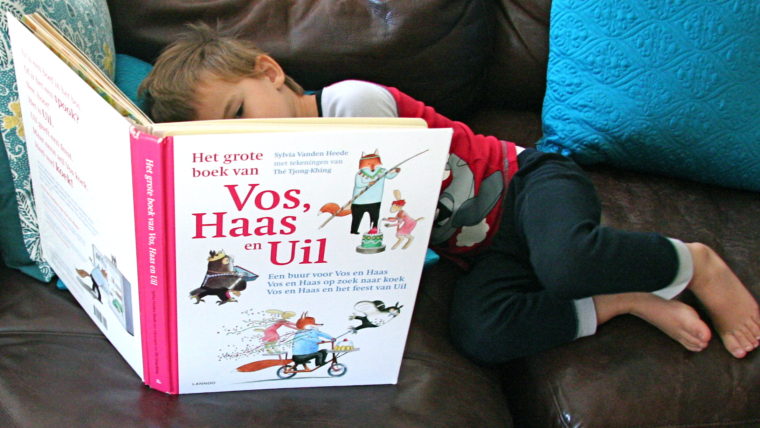
When we got pregnant with our son, there was no doubt in our minds that we wanted to raise him bilingual.  My husband’s family speaks English very poorly. (Which is kind of hard to do in a country that prides itself on its language skills.) The grandparents already had a hard enough time dealing with one of their grandsons growing up with an ocean between them. How sad would it be if they couldn’t even talk to each other?

I did not research a lot about raising a baby. In hindsight, I am baffled about how casual I was about the whole ordeal. But I did look into the best way to go about raising a bilingual child.

Turns out there is no best way. Very little research seems to have been done about it.  (Or it is hard to find.) So I can only tell you how we did it. And what our results have been so far.

At almost three years old our son speaks English and Dutch as well as can be expected of a toddler. Full sentences with some grammatical mistakes here and there. His Dutch does have a horrendous American accent. But it seems to be getting less noticeable.

Even when he was still in my belly, I started speaking some Dutch. I had read that  fetuses differentiate between two languages. From the moment when he was born, I tried my hardest to speak Dutch to him. My husband, also a Dutch-speaking Belgian, got to stick to English. We made that decision based on our accents. As much as my son has an American accent, I have a horrible Dutch accent.

In the beginning, with such a small baby, I would sing Flemish songs to him. (Flemish is the Belgian Dutch dialect.) Even though I hadn’t discovered RIE yet, I instinctively talked him through diaper changes. I fondly remember struggling to find the Dutch word for diaper. After only 4 years in America, I had already forgotten so much.

My son’s first word was ‘ball’. “Ba.” It might not be a coincidence that this is ‘bal’ in Dutch, with almost the same pronunciation. He said it right around 12 months. Although he might have been saying it earlier, since this mama thought children pronounced their first words perfectly. It took him pointing at a picture of a ball repeatedly, while saying “Ba”, before I put two and two together. Poor kid must have been so frustrated.

From then on his language took off like a speed train. By 18 months he was forming two word sentences, in both languages. He would effortlessly switch between Dutch and English, depending on whether he was talking to my husband or I.

Right after our big move from California to Ohio my son stopped speaking Dutch. It made me a little sad. But I respected his choice, while I doggedly continued talking in Dutch to him. He understood what I was saying, but would always reply in English.

And then, 6 months later, oma and opa came to visit. They also brought his 6 year old cousin B. One week later my son was speaking Dutch as if he had never stopped. In the same effortless way he articulated himself in English. The only difference? That big, fat American accent.

So far I can say that our bilingual adventure has been a smooth one. Our son never had a speech delay. To the contrary, he is extremely verbal for his age. At this point I also notice that he picks up other languages too. Or at least notices another language is spoken. When he plays with his Croatian or Indian friend, he will tell my husband afterwards about the words his friends use. Example: “T. always says: “što je da, mama?” (Yes, I had to google the spelling, since we only know the pronunciation.)

Research also shows that bilingualism gives children an advantage later in life too. We’ll have to wait and see about that. Right now we are just  happy that oma and opa can skype with their grandson and do more than just wave at him.

Categories: Development 5 Comments / Share

« 10 Things Not to Say to a Working Mom
And Her Heart Grew Two Sizes »

Comments

  1. Tiki Mama says

    August 16, 2013 at 4:01 pm

    This is so fascinating to read about! I’m so glad you’ve been successful.

    I tried to convince my Russian-speaking husband to teach our son his native tongue while I spoke English to the baby, but he never really did. Instead, our son T only hears Russian when daddy’s frustrated!

    Reply
  2. Mama S says

    August 17, 2013 at 12:11 am

    We also have 2 bilingual children 🙂 This is a good topic to write about!

    Reply
  3. Alena says

    September 1, 2013 at 3:12 pm

    We have a tri-lingual child. She is almost 3 and while she understands perfectly all 3 languages, she prefers to speak English with some infusion of other languages. I think the issue is that we speak English at home since we don’t know each other languages, but we do speak our own languages to her. I really hope she will speak all 3 languages!

    Reply
    • Veronique says

      September 11, 2013 at 8:41 am

      Just keep it up. If she understands, she can speak it. Although maybe with a horrible accent. 😉

      Reply
  4. Darya says

    April 17, 2018 at 7:31 pm

    My daughter spoke mostly Russian for the first two years and then she almost completely switched to English. I respect her choice, although do my best to speak to her in Russian. She replies in English. Hopefully, it’s still at the back of her mind. I really want her to be able to communicate with my parents in Russian on Skype. Right now she says most things in English but understands everything I say.

    Reply

Leave a Reply Cancel reply

Your email address will not be published. Required fields are marked *

Your journey for better parenting starts here! Sign up for our newsletter and get expert advice on effective parenting techniques delivered to your inbox.

Topics

  • babies
  • Behavior & Discipline
  • Big Kids (6-12)
  • Development
  • education
  • Emotional Health & Safety
  • Family & Siblings
  • Feeding & Nutrition
  • Hygiene & Potty
  • Physical Health & Safety
  • Play & Education
  • Pregnancy & Fertility
  • preschoolers (age 3- 5)
  • Sleep
  • Teens
  • Toddlers


Classes & Workshops

Classes & Workshops — Bringing parents together to have more confidence in parenting...even when it's hard. Book your seat now →

Personal Coaching

Set up a one-on-one session for your unique situation & start implementing strategies confidently and quickly. Request a free consultation →

Speaking Engagements

Ask Kelly to talk at your school, workplace, place of worship or other community event. Learn More →


Your journey for better parenting starts here! We will guide you & mentor you for maintaining better relationships with your kids. Sign up for our newsletter and get tips & expert advice on effective parenting techniques delivered to your inbox.

Daily Parenting Inspiration

My youngest finished 8th grade yesterday; my oldes My youngest finished 8th grade yesterday; my oldest will be a senior, and that has me feeling lots of things!

 Here are my thoughts:
My job as a parent is changing.
One child is about to become a senior in high school, and the other is starting high school, and somewhere along the way, I crossed into a whole new phase of parenting: preparing my kids for adulthood.

These days, parenting feels less like managing every detail and more like slowly stepping back so they can learn to manage their own lives. Which sounds beautiful and inspiring until you’re sitting in the passenger seat while your teenager says, “I got it,” approaching a yellow light. 😵‍💫

We’ve entered the season of job applications, making appointments, missed alarms, learning lessons the hard way, and me trying very hard not to immediately swoop in.

And honestly? It’s emotional.
Because while they’re becoming more independent, I’m also realizing I get to start thinking about what’s next for me too. My goals, my work, my marriage, my next chapter.
This phase feels a little like letting go with one hand while reaching forward with the other. 

I get to just be their friend a lot more while making sure they'll be a good roommate and spouse in the near future.

I'm close to working myself out of job and I honestly think I'm ready for it!

#parentingteens #parenteffectivenesstraining #growingupfast
“My child is not giving me a hard time… my child i “My child is not giving me a hard time…
my child is having a hard time.”

That one shift changes everything.

Less: “Why are they doing this?”
More: “What’s going on for them?”

Hard behavior is often just… hard feelings.

When we see the struggle,
we respond differently.

Less reacting.
More supporting. 💛 #respectfulparent #sandiegomoms #parenteffectivenesstraining #attachmentparenting #rie #PositiveParenting #parentingtips #DefianceOrMisunderstanding
“I didn’t say it was your fault… I said I blame yo “I didn’t say it was your fault…
I said I blame you.” 😅

When kids blame, it feels personal.

But it’s usually not about being right…
it’s about letting out big feelings.

Blame =
“I’m frustrated.”
“I’m overwhelmed.”

Before correcting, try connecting:

“You’re really upset.”
“That was hard.”

Less defending.
More understanding. 💛
“Children do well when they can.” So when they’re “Children do well when they can.”

So when they’re not…
It’s not about won’t.
It’s about can’t (yet).

Less: “Why are they acting like this?”
More: “What’s getting in their way?”

Skills take time.
Emotions get big.
Brains get overwhelmed.

And in those moments,
they don’t need perfection…

They need curiosity - not furiosity. 😋💛

Yup, I made up a word.

#respectfulparent #childrendowellwhentheycan #drrossgreen #parenteffectivenesstraining
End of school = chaos… Then suddenly… no structure End of school = chaos…
Then suddenly… no structure 😅

Or camp… to camp… to camp.

Summer is fun ☀️
But it can also mean:
more pushback
more “I’m bored”
more sibling stuff
more BIG feelings

And when routines change, behavior usually does too.

The good news?
You don’t need more control… you need better tools.

✨ listen without shutting them down
✨ set limits without the battles
✨ handle big emotions (theirs + yours)

Less surviving
More thriving

My summer Parent Effectiveness Training class is coming up 💛
Drop a ☀️ and I’ll send details!

 #respectfulparent #sandiegomoms #parentingtips #parentingmiddleschoolers #PositiveParenting #attachmentparenting #rie #parenteffectivenesstraining #RespectfulParenting
Oof. This is a hard one sometimes! Share your exam Oof. This is a hard one sometimes! Share your examples of a time this happened 🙏🏼🙈
I'm just reading the book "Untangled -Guiding Teen I'm just reading the book "Untangled -Guiding Teenage Girls Through The Seven Transitions into Adulthood" by @lisa.damour ,  and I love it. This one struck a chord with me so I thought I'd share. It's from the section "The Pull of Popular."

What does “popular” actually mean?

Because when you look a little closer, the kids who seem the most “popular” aren’t always the most liked. Sometimes, their influence comes from social power, not genuine connection. And that can come with a lot of pressure—on everyone.

This can be a powerful conversation to have with your child.

Not in a lecture-y way, but with curiosity:
“Do kids actually like being around her, or are they worried about being on her bad side?”
“What makes a friendship feel good to you?”

Helping kids think beyond popularity and toward the quality of their friendships gives them something much steadier to stand on.

Because in the long run, feeling safe, accepted, and able to be yourself matters a whole lot more than being “popular" and then you may just hit that sweet spot of being "popular" because you are well liked!

 #parentingtips #sandiegomoms #respectfulparent #raisingteenagegirls #parentingmiddleschoolgirls
We have dreams for our kids. The friends we hope We have dreams for our kids.

The friends we hope they choose.
The sports we hope they love.
The grades we hope they earn.
The path we quietly map out in our minds…

And then they grow.
And they choose.

Sometimes differently than we imagined.

And that’s where it gets uncomfortable.

Because the real question becomes:
Are we raising children who follow our path…
or children who can find their own?

Letting go doesn’t mean stepping back completely.
It means shifting roles.

From director ➡️ to guide
From fixing ➡️ to listening
From telling ➡️ to being available

It means offering wisdom when it’s invited,
and trusting them enough to figure some things out on their own.

That’s not easy.

But that’s where confidence is built.
That’s where ownership grows.
That’s where they become themselves.

Not a version of us.

If this hits home, this is exactly the kind of skill we work on in Parent Effectiveness Training—how to support your kids without shutting them down.
My next class starts in less than two weeks:
☀️ Tuesday Mornings
🗓️ April 7th – May 26th
⏰ 9:30 am – 12:30 pm (Pacific Time)
📚 Eight classes
And of course, I'm still working on this!

Reg info in first comments/bio 👇👇
Follow on Instagram


  • Privacy Policy
  • Free Consult

© 2026 Respectful Parent · All Rights Reserved.

  • Facebook
  • Instagram