Next Course Starting June 16th. Sign Up!

Respectful Parent

Parent Effectiveness Training, San Diego Parenting Classes

  • Home
  • About Kelly
    • Parenting Philosophy
    • What You Will Learn
    • Testimonials
  • Services
    • Classes & Workshops
    • Personal Coaching
    • Speaking Engagements
  • Resources
    • Parenting Books
    • Children’s Books
    • Thoughtful Independent Play Toys & Gift Guide
    • Awesome Parenting Gear
  • Free Consult
  • Contact
  • Blog
  • Privacy Policy

One Tip to Foster a Growth Mindset in Kids

November 19, 2019

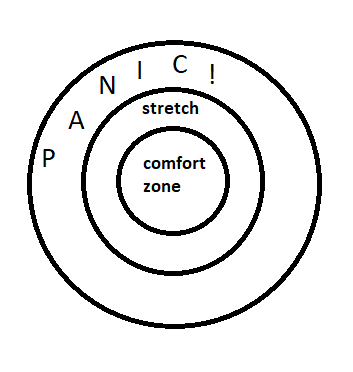
Our comfort zones are meant to keep us safe and, well, comfortable, but they can sometimes hold us back from something we want or need and prevent a growth mindset.  I first learned about this diagram not too long ago and presented it to my children. The comfort zone is where you feel safe and comfortable, you are relaxed. A stretch is where you’re a little out of your comfort zone maybe a little uncomfortable but you aren’t panicking.

This simple graphic can be very impactful for a child that struggles trying new things or has a big transition ahead. It can help them understand that stretching their comfort zone is ok and healthy and it also helps quite a bit with growth mindset everyone’s talking so much about. Below is a printable you can show your kids to help them with this too. 
comfort zone, growth mindset

Stretching  20% of The Time will Increase Your Comfort Zone and Your Growth Mindset.

Isn’t that cool?! Just show this graphic to your kids and explain that a stretch is good, but if they begin to feel panic, it might be time to take a break and try again after some comfort zone time.  Soon, they’ll be ready to stretch again!

In some cases, staying in the comfort zone can keep children in a fearful or anxious place.  And that’s when we, as caregivers – and as teachers – need to help our children STRETCH in order to encourage that growth mindset. We can help them learn that they can do hard things!

Have you ever had a problem that just made you panic?  It felt way out of your reach, abilities, or control and you were sure you couldn’t handle it?  Our children can feel the same way about trying new things, going new places, or when approaching unknowns of any kind.

So What Do I Mean by STRETCH? 

Lev Vygotsky studied children’s development and coined the term “zone of proximal development”.  Sometimes called the ZPD, it is an area of learning that happens when a person is assisted by someone with more skills.  

In the case of STRETCH, you, the adult, are the teacher.  And the child learning the skill set cannot do it without the assistance of a teacher.  In other cases, the teacher may be a peer with more skills, but here, that person is YOU.  

The teacher assists with the minimal level of help necessary until the child no longer needs assistance.  This same process is also referred to as scaffolding.  Don’t just look at what the child is capable of doing on their own.  You can also look at what they are capable of doing with social and emotional scaffolding.  Your job is to help move the child’s mind forward step by step, mindful of which lessons the child is ready for.  

You’re probably already a master at scaffolding for day to day activities.  You don’t expect your one-year-old to make their own lunch, but over time you’ve shown your child how to open a jar, use a butter knife, and cut bread.  It’s likely the same for getting dressed, tying shoes, or even brushing their teeth. We teach them by breaking them down into steps that are manageable for developing bodies and brains.  In other words, we let them do what they CAN do and provide minimal help in supporting until they are able to do it on their own. We can use these same techniques and apply them to social-emotional growth and development.  Here’s an example of how that worked in our home. 

My children started a new school and they were also signed up for a new soccer team. One of them told me “Mom, I’m stretching every day in this school. Soccer is way too much stretch right now. I need to rest in my comfort zone after school for a while. So taking this information in, we decided that skipping soccer this season and trying basketball in the winter league would be a way to manage the stretch and keep it from becoming overwhelming and out of the panic zone. The school transition went smoothly, my children could articulate their comfort zones and watch them grow with each new “stretch experience.” This has been such a useful tool for increasing their mindfulness and self-awareness. 

How Can You Help Your Kids STRETCH Instead of Panic?

  1. Use reflective or active listening to try to fully understand the underlying issue or fear the child is facing.  Where is the comfort zone?
  2. Identify where the child may be ready to stretch. What skills or language do they already have for this situation?
  3. Have the child, if they can, give you some ideas of how far they can stretch.  What action might they be able to take with a little help?
  4. Make a plan with the child.  What steps will they take and how can you help?
  5. Support them in executing the plan! 

The concept of scaffolding is used in learning throughout life and is the basis of how everyone learns b

Growth Mindset
truthseeker08 / Pixabay

est.  It has been applied to constructivist teaching, meeting students where they are at, and identifying individual styles and strengths in learning.  Because humans do not usually begin by knowing everything that there is to know, the basics are learned first, and skills and knowledge build upon each other towards mastery.  

The same is true for social and emotional learning.  The skills build on each other, and without a knowledgeable teacher to guide us, those big skills or events can be panic-inducing.  So before we make a big leap, we need help to STRETCH and let them spend time in their COMFORT ZONE to recover from big stretches or panic. 


Want more posts like this? Check these out ⤵⤵⤵

The Wheel of Awareness

How to Teach Kids About The Brain – Hey Sigmund

When Fear Takes Over Your Child – Respectful Parent

 

Categories: Development 1 Comment / Share

« The Secret to Staying Calm when You’re Mad
One Question That Changed Our (Co-)Parenting Game »

Trackbacks

  1. Screen Time Without Power Struggles for Big Kids | Respectful Parent says:
    May 4, 2021 at 2:35 pm

    […] One Tip to Foster a Growth Mindset in Kids – Respectful Parent […]

    Reply

Leave a Reply Cancel reply

Your email address will not be published. Required fields are marked *

Your journey for better parenting starts here! Sign up for our newsletter and get expert advice on effective parenting techniques delivered to your inbox.

Topics

  • babies
  • Behavior & Discipline
  • Big Kids (6-12)
  • Development
  • education
  • Emotional Health & Safety
  • Family & Siblings
  • Feeding & Nutrition
  • Hygiene & Potty
  • Physical Health & Safety
  • Play & Education
  • Pregnancy & Fertility
  • preschoolers (age 3- 5)
  • Sleep
  • Teens
  • Toddlers


Classes & Workshops

Classes & Workshops — Bringing parents together to have more confidence in parenting...even when it's hard. Book your seat now →

Personal Coaching

Set up a one-on-one session for your unique situation & start implementing strategies confidently and quickly. Request a free consultation →

Speaking Engagements

Ask Kelly to talk at your school, workplace, place of worship or other community event. Learn More →


Your journey for better parenting starts here! We will guide you & mentor you for maintaining better relationships with your kids. Sign up for our newsletter and get tips & expert advice on effective parenting techniques delivered to your inbox.

Daily Parenting Inspiration

“My child is not giving me a hard time… my child i “My child is not giving me a hard time…
my child is having a hard time.”

That one shift changes everything.

Less: “Why are they doing this?”
More: “What’s going on for them?”

Hard behavior is often just… hard feelings.

When we see the struggle,
we respond differently.

Less reacting.
More supporting. 💛 #respectfulparent #sandiegomoms #parenteffectivenesstraining #attachmentparenting #rie #PositiveParenting #parentingtips #DefianceOrMisunderstanding
“I didn’t say it was your fault… I said I blame yo “I didn’t say it was your fault…
I said I blame you.” 😅

When kids blame, it feels personal.

But it’s usually not about being right…
it’s about letting out big feelings.

Blame =
“I’m frustrated.”
“I’m overwhelmed.”

Before correcting, try connecting:

“You’re really upset.”
“That was hard.”

Less defending.
More understanding. 💛
“Children do well when they can.” So when they’re “Children do well when they can.”

So when they’re not…
It’s not about won’t.
It’s about can’t (yet).

Less: “Why are they acting like this?”
More: “What’s getting in their way?”

Skills take time.
Emotions get big.
Brains get overwhelmed.

And in those moments,
they don’t need perfection…

They need curiosity - not furiosity. 😋💛

Yup, I made up a word.

#respectfulparent #childrendowellwhentheycan #drrossgreen #parenteffectivenesstraining
End of school = chaos… Then suddenly… no structure End of school = chaos…
Then suddenly… no structure 😅

Or camp… to camp… to camp.

Summer is fun ☀️
But it can also mean:
more pushback
more “I’m bored”
more sibling stuff
more BIG feelings

And when routines change, behavior usually does too.

The good news?
You don’t need more control… you need better tools.

✨ listen without shutting them down
✨ set limits without the battles
✨ handle big emotions (theirs + yours)

Less surviving
More thriving

My summer Parent Effectiveness Training class is coming up 💛
Drop a ☀️ and I’ll send details!

 #respectfulparent #sandiegomoms #parentingtips #parentingmiddleschoolers #PositiveParenting #attachmentparenting #rie #parenteffectivenesstraining #RespectfulParenting
Oof. This is a hard one sometimes! Share your exam Oof. This is a hard one sometimes! Share your examples of a time this happened 🙏🏼🙈
I'm just reading the book "Untangled -Guiding Teen I'm just reading the book "Untangled -Guiding Teenage Girls Through The Seven Transitions into Adulthood" by @lisa.damour ,  and I love it. This one struck a chord with me so I thought I'd share. It's from the section "The Pull of Popular."

What does “popular” actually mean?

Because when you look a little closer, the kids who seem the most “popular” aren’t always the most liked. Sometimes, their influence comes from social power, not genuine connection. And that can come with a lot of pressure—on everyone.

This can be a powerful conversation to have with your child.

Not in a lecture-y way, but with curiosity:
“Do kids actually like being around her, or are they worried about being on her bad side?”
“What makes a friendship feel good to you?”

Helping kids think beyond popularity and toward the quality of their friendships gives them something much steadier to stand on.

Because in the long run, feeling safe, accepted, and able to be yourself matters a whole lot more than being “popular" and then you may just hit that sweet spot of being "popular" because you are well liked!

 #parentingtips #sandiegomoms #respectfulparent #raisingteenagegirls #parentingmiddleschoolgirls
We have dreams for our kids. The friends we hope We have dreams for our kids.

The friends we hope they choose.
The sports we hope they love.
The grades we hope they earn.
The path we quietly map out in our minds…

And then they grow.
And they choose.

Sometimes differently than we imagined.

And that’s where it gets uncomfortable.

Because the real question becomes:
Are we raising children who follow our path…
or children who can find their own?

Letting go doesn’t mean stepping back completely.
It means shifting roles.

From director ➡️ to guide
From fixing ➡️ to listening
From telling ➡️ to being available

It means offering wisdom when it’s invited,
and trusting them enough to figure some things out on their own.

That’s not easy.

But that’s where confidence is built.
That’s where ownership grows.
That’s where they become themselves.

Not a version of us.

If this hits home, this is exactly the kind of skill we work on in Parent Effectiveness Training—how to support your kids without shutting them down.
My next class starts in less than two weeks:
☀️ Tuesday Mornings
🗓️ April 7th – May 26th
⏰ 9:30 am – 12:30 pm (Pacific Time)
📚 Eight classes
And of course, I'm still working on this!

Reg info in first comments/bio 👇👇
My daughter was venting to me about a recent pract My daughter was venting to me about a recent practice…
and of course, I did what many of us do.

I offered a solution, "I mean, you don't really need to go next time; it's optional." 

Her response?

“Mom… I just need to complain, not fix it. I'm still going.”

…Heard. 😅

It was such a good reminder.

When kids come to us upset, our instinct is to help. To fix. To make it better. But sometimes all of our great ideas land like this:

🚪 door closes
😶 conversation over

Because what they actually needed wasn’t a solution.
It was space.

Space to vent.
Space to feel heard.
Space to figure it out themselves.

And when we jump in too quickly with advice, it can unintentionally send the message:
“You can’t handle this.”
or
“Your feelings need fixing.”

Even when that’s the last thing we mean.

Sometimes the most helpful thing we can say is:
“That sounds really frustrating.”
“Ugh, that’s tough.”
“I’m here.”

That’s it.

No fixing. No coaching. No life lesson.

Just connection. 💛

(Still practicing this over here, by the way 🙋‍♀️)

If this hits home, this is exactly the kind of skill we work on in Parent Effectiveness Training—how to support your kids without shutting them down.

My next class starts in less than two weeks:

☀️ Tuesday Mornings
🗓️ April 7th – May 26th
⏰ 9:30 am – 12:30 pm (Pacific Time)
📚 Eight classes
And of course, I did what many of us do.
Reg info in first comment 👇👇

Come learn how to listen in a way that actually keeps your kids talking.

 #PositiveParenting #parentingclasses #ParentEffectivenessTraining #respectfulparent #rie #attachmentparenting #sandiegomoms #parentingtips
Follow on Instagram


  • Privacy Policy
  • Free Consult

© 2026 Respectful Parent · All Rights Reserved.

  • Facebook
  • Instagram