
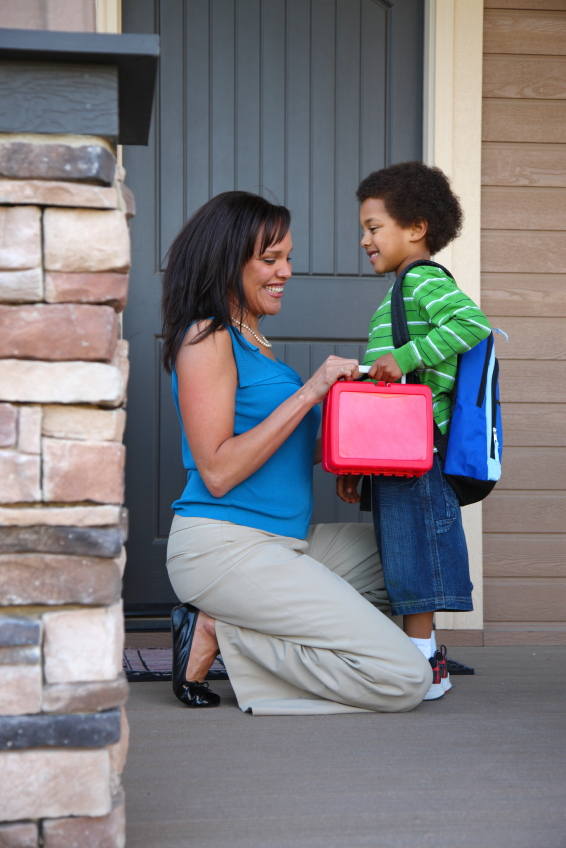
 Preschool Drop Off can be hard. Really hard. Most likely you have had at least one of the following traumatic events happen before even arriving at school: someone wouldn’t get dressed, someone had on the wrong color underwear, someone didn’t like what you made for breakfast, someone had an itchy tag, someone had an itchy sock, someone wouldn’t put shoes on, someone had to poop, someone would not get in their car seat, and—FOR CRYING OUT LOUD! SOMEONE ELSE POOPED!
All parents know these mornings. So by the time we get to preschool, or daycare, or wherever we are going to leave our precious child, we just want it to be over and done with. There are many ways we parents react depending on the morning experience. Let’s face it, we’ve all witnessed and participated in terrible Drop Offs—I know I have. So for the betterment of Drop Offs everywhere, and for the sake of our precious ones’ poor teachers, let’s take a closer look at these common Drop Off disasters.
The Drop and Run: This is the most common Drop Off of all because schools usually tell parents to leave quickly once they say good-bye. However, I don’t think they mean for the parent to hurriedly rush in the door, put the child in a teacher’s arms, kiss him, and run out the door. The Drop and Run gives the child emotional whiplash—he has no chance to adjust to the transition. Be calm, we know you changed a million diapers before the sun came up, and that you probably have food in your hair, just calm down for 5 more minutes, you are almost free. Let your child adjust for a minute or two, tell him what’s going on and that you will be back soon, then leave.
The Linger: This is the Drop Off in which the parent stays too long. Way, way too long. The child knows you are leaving, you know you are leaving, yet no one can move on. Should the child be sad? Go play? Stay with you? It’s confusing for her! The Linger is not going to prevent her sadness at the separation; it will only prolong it and add confusion; so say good-bye and go on, go! Give the child permission to be sad or to move on, but do something! If you are worried, call in five minutes or have the teacher text you. They really don’t mind.
The Sneak Out: The parent takes the child to school, waits until he is engaged and then leaves without saying good-bye. Not ok, I say. My husband once left me at a birthday party (IN A BAR!) because he told me he was ready to go and walked home. Next time I looked up he was gone. Gone! I did not realize he meant “I’m ready to go NOW, right this minute; you can’t finish your conversation.” Your child feels the same, so don’t be surprised if your child smacks the back of your head and says, “DUDE. What the &#%$ is WRONG with you?!” like I did to my husband. It may be easier for you, but it’s harder for your child. It breaks trust and causes anxiety. You will pay for it in clinginess later, because he has learned that you will sneak away if he leaves your side. Calmly say good-bye and accept your child’s emotions.
The Happy Hour: This is the social hour Drop Off. Parent starts chatting, child goes to play, parent says good-bye, parent chats some more, disrupts child to say, “I’m leaving now,” child cries. The parent has missed the appropriate “leaving window” and the child who was accepting of your leaving is now going ape $#&%”— he is confused because it is unclear to him when you will be leaving. If you want to talk to other parents, go outside and avoid sending conflicting signals.
The Instant Replay: This is the Drop Off that never ends. The parent leaves and comes back, causing the child to go through the emotional turmoil of separation more than once. The parent is highly agitated, due to aforementioned rough morning, forgets the lunch box, goes back to the car, comes back in, forgets diapers, goes back to car. It’s ok; we get it, just leave it at the door and call the teacher. She’ll be glad she didn’t have to start over too.
The Bomb: The parent has an important, alarming, or private message that needs to be discussed with the teacher and attempts to discuss this at Drop Off. This is a double whammy because it affects your child and derails the teacher. If you have a bomb to drop, don’t drop it in front of your child. Drop Off is not the time to have a major discussion. Teachers have a lot of children to greet and to make comfortable. Schedule a meeting or send an email instead. Drop Off will be smoother and your discussion will be much more effective without all the distraction.
The Candy Man: This is the Drop Off that comes with food, usually sugary sweet food—at 7am. Sometimes it is used as a bribe to get out the door faster. Sometimes the child wouldn’t eat breakfast so he comes with some sort of bar or sweet snack or cereal. Of course, all of the other children want the food, and half are allergic. Please don’t set the teacher up to fail by giving half the class a sugar rush this early in the morning, she is still on her first cuppa. Just tell her your kid didn’t eat, and give her the snack so she can give it to him privately when he gets hungry.
If these are the usual Drop Off Disasters, what does an ideal Drop Off look like? It will look different for each parent and child, but the rule of thumb is: stay as long as you want, but once you’ve said good-bye, leave. The ideal Drop Off for my daughter looks like this:
In the car I tell her what Drop Off will be like today. If I can stay, I tell her I can stay a few minutes. If I can’t stay, I tell her it’s a quick Drop Off day and where I need to go. This helps her mentally prepare for what will happen and shows her I keep my promises. Once we get there, we greet the teachers and I see what she does; if she does not engage in play, I go over to some other children and see what they are doing. Since I know she usually feels comfortable with me leaving once she is engaged in play, I sometimes ask her if she wants to play cars or blocks with me. Sometimes she just has a hard time saying good-bye—she is two, after all. Those days I know that if I stay it only makes it harder for her because she is worrying about when I will go. Instead, I look her in the eye and say strongly, “A, look at me. I know this is hard for you. I will come back. I always come back. I will be here after lunch. It’s ok to be sad, let your cry out. I love you.” Then I leave.
Drop Off is about honesty and trust. She learns that I will be straightforward about what to expect and that I keep my promises about when I will leave and when I will come back. It’s ok for her to be upset; I can’t be responsible for her reactions, I can only allow for them. If she is upset, she is entitled to her sadness, but she also deserves a parent who will remain calm and confident while leaving. She can process the emotions. Over time, she realizes that I will come back. Every day I leave and come back as promised, she learns that she need not be as afraid next time. She is learning that her feelings change, sadness goes away and happiness comes back. She is learning to trust, she is learning that she can handle these emotions and separations. She’s learning that she is brave.
So go on, drop her off!

Mrs. Meier gave me great alternative methods for drop off of my grandchild. Her writing style is direct, funny but strong. Thank you.